Magazine dimensions determine how your publication looks, feels, and sells. The standard magazine size in the USA measures 8.5 × 11 inches (216 × 279 mm).
This size matches letter paper, helps reduce printing costs, and fits most newsstands perfectly.
About 60–70% of American consumer magazines use this format. But it’s not the only option. From compact digest size to dramatic tabloid, every format serves a different purpose.
What Are Standard Magazine Dimensions?
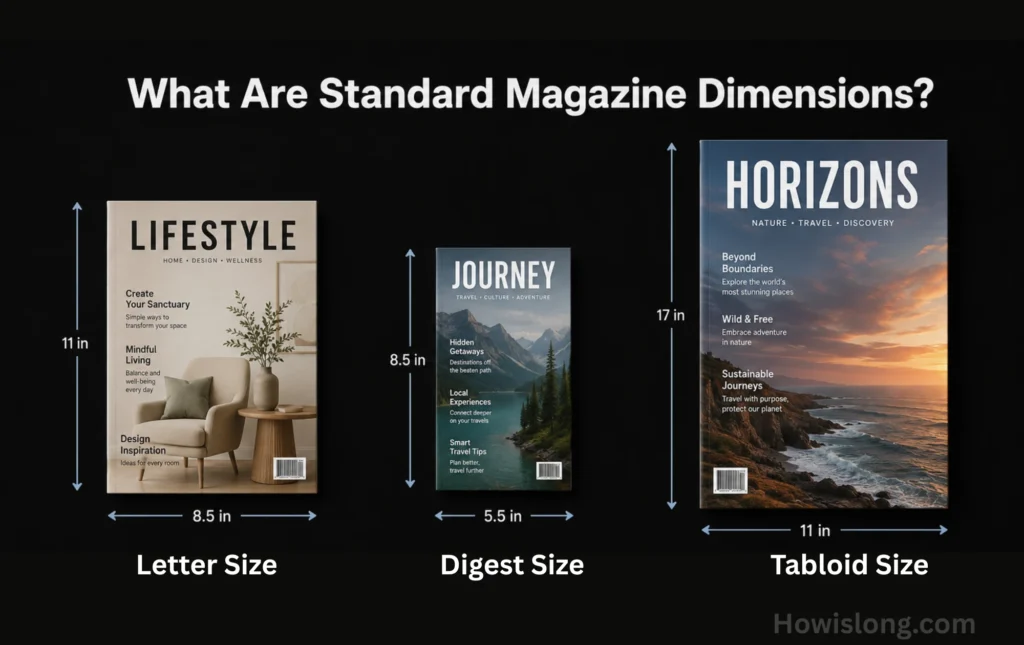
US magazine dimensions follow three main formats. Each one fits different content types, budgets, and audiences.
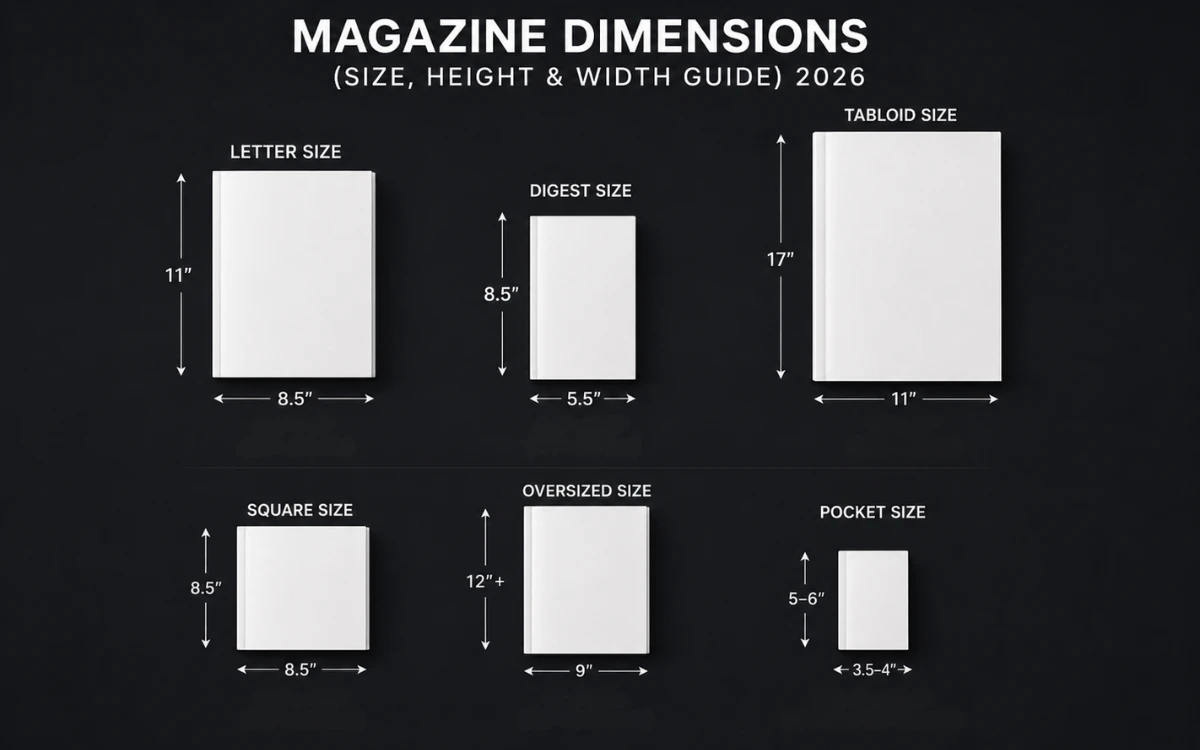
Letter Size Magazine (8.5 × 11 inches)
Letter size is the most popular magazine size in America. It measures 8.5 inches wide by 11 inches tall — identical to standard office paper.
Time, People, and Cosmopolitan all use this format. It gives editors plenty of room for photos, ads, and long articles. Printers love it because no custom cuts are needed. That keeps production costs low.
Digest Size Magazine (5.5 × 8.5 inches)
Digest size measures 5.5 × 8.5 inches (140 × 216 mm). It’s exactly half a letter sheet, so paper waste drops to nearly zero.
This compact magazine format costs about 30–40% less to produce than letter size. Reader’s Digest made this format iconic. It fits in a jacket pocket or travel bag with ease.
Tabloid Size Magazine (11 × 17 inches)
Tabloid magazine dimensions hit 11 × 17 inches (279 × 432 mm). That’s a big canvas.
Entertainment Weekly and newspaper supplements use this format. Full-bleed photography and bold layouts shine here. Production costs run 40–50% higher than letter size, but the visual impact justifies it for the right audience.
Magazine Height, Width & Size Variations
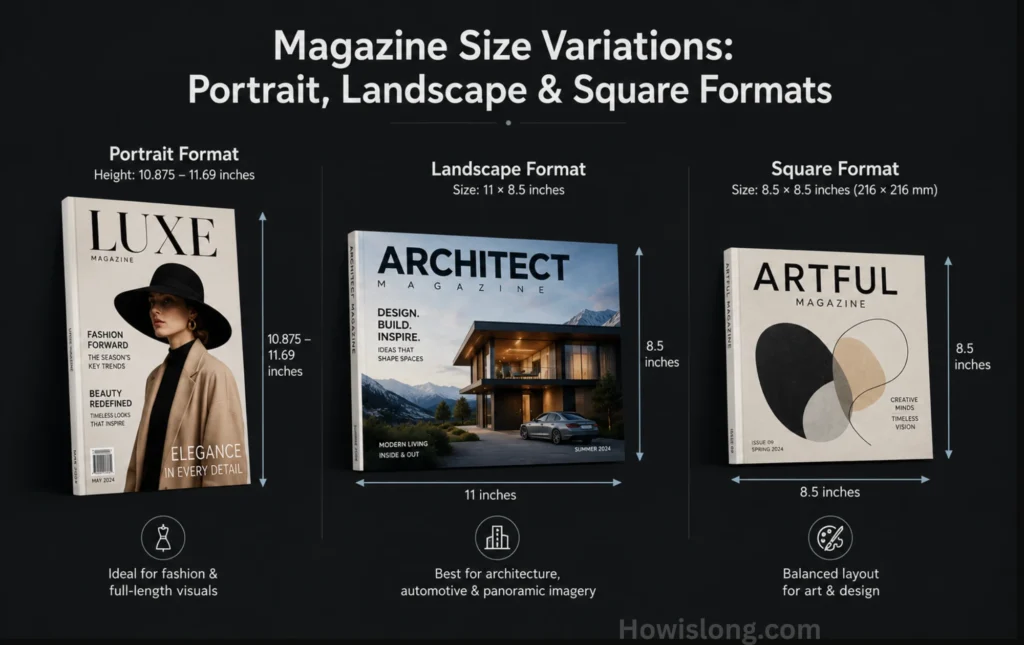
Not every publication fits a standard mold. Magazine size dimensions vary based on content, audience, and brand identity.
Taller Portrait Format Magazines
Portrait-oriented magazines typically range from 10.875 to 11.69 inches tall. Fashion titles prefer this vertical layout because it frames full-length model shots perfectly.
Taller formats also stand out better on newsstand shelves. They draw the eye naturally upward, making cover designs feel more dynamic and premium.
Wider Landscape Format Magazines
Landscape magazines flip the ratio — wider than they are tall. A common size is 11 × 8.5 inches.
Architecture, automotive, and scenic photography benefit most from this horizontal magazine ratio. Wide images fill the page without cropping. The format feels cinematic and immersive.
Landscape binding needs reinforcement. The spine can sag without a heavier stock or stronger adhesive.
Square Format Magazines (8.5 × 8.5 inches)
Square magazine dimensions measure 8.5 × 8.5 inches (216 × 216 mm). Art and design publications love this format for its visual balance.
Every image fits without rotation concerns. Layouts feel deliberate and creative. However, non-standard paper cuts push costs about 15% higher than letter size.
More Posts:Aluminum Can Dimensions: Standard Sizes, Height & Diameter (2026)
Specialized & Custom Magazine Sizes
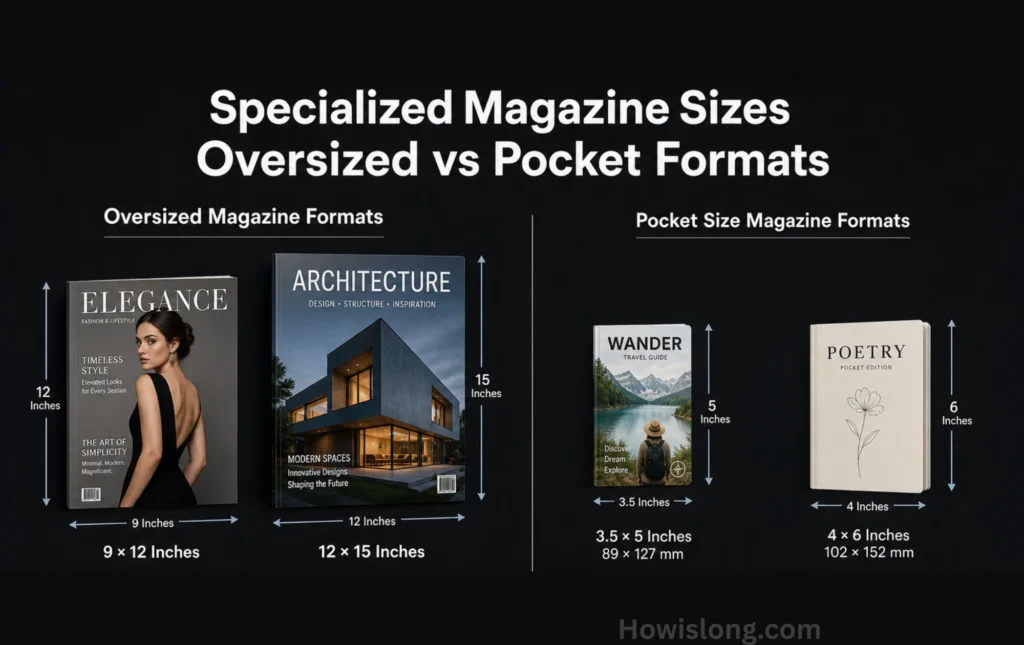
Some publications need something beyond the standard. Custom magazine dimensions help brands communicate exclusivity, portability, or creativity right from the cover.
Oversized Magazines (9 × 12 Inches and Larger)
Oversized magazine dimensions start at 9 × 12 inches and can stretch to 12 × 15 inches or beyond.
High-end fashion, architecture, and fine art titles use these premium formats. Production costs jump 50–70% higher than standard letter size. But the larger magazine page size creates an immersive, gallery-quality reading experience that justifies premium cover prices.
Pocket Size Magazines (3.5 × 5 to 4 × 6 Inches)
Pocket magazines range from 3.5 × 5 inches to 4 × 6 inches (89 × 127 mm to 102 × 152 mm).
Travel guides, poetry collections, and niche zines use this ultra-compact format. They cost roughly 30% less to produce and distribute. Readers carry them anywhere without a second thought.
The limited space forces tight, focused writing. Every word earns its place. That actually improves editorial quality.
Real-World Examples — Vogue, Time & National Geographic
Real publications reveal how size choices match brand identity.
Vogue magazine size measures 8 × 10.875 inches. This custom magazine size dimension is slightly narrower and shorter than standard letter. It creates elegant vertical proportions built for fashion spreads.
Time Magazine uses 8 × 10.75 inches — close to letter size but slightly trimmed for a cleaner edge. News content and photography sit in balanced harmony at this dimension.
National Geographic also measures 8 × 10.875 inches. The format handles breathtaking wildlife and landscape photography with precision and depth.
Each of these titles chose their magazine size deliberately. None defaulted to standard. That decision shaped their entire visual identity.
US vs International Magazine Dimensions
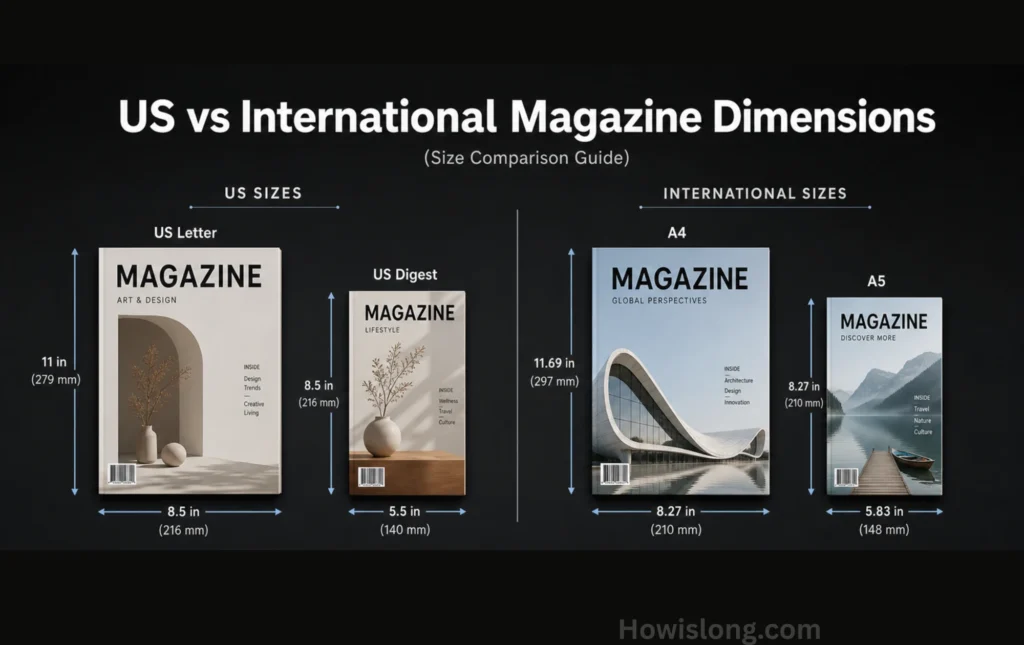
American magazine sizes and international standards don’t align perfectly. This matters if you distribute globally or print across multiple markets.
A4 vs US Letter Magazine Size
A4 magazine size measures 8.27 × 11.69 inches (210 × 297 mm).
US Letter measures 8.5 × 11 inches (216 × 279 mm).
A4 is slightly narrower but taller than US Letter. That 0.69-inch height difference forces layout adjustments when converting between formats. Text columns, image placements, and margins all shift.
Most international publishers use A4 magazine size as their baseline. American publishers stick to letter because it matches domestic printing equipment. Brands printing in both markets often produce two separate editions.
A5 vs US Digest Magazine Size
A5 measures 5.83 × 8.27 inches (148 × 210 mm). US Digest measures 5.5 × 8.5 inches (140 × 216 mm).
Both are close in size but not identical. A5 derives mathematically from A4 — cut an A4 sheet in half and you get A5. This clean relationship eliminates paper waste in European print runs.
US Digest follows its own standard, independent of the metric system. European compact magazines use A5 for consistency. American compact publications use Digest for cost efficiency.
More Posts:Celsius Can Dimensions: Complete Guide With Sizes, Heights & Volume (2026)
Print vs Digital Magazine Dimensions
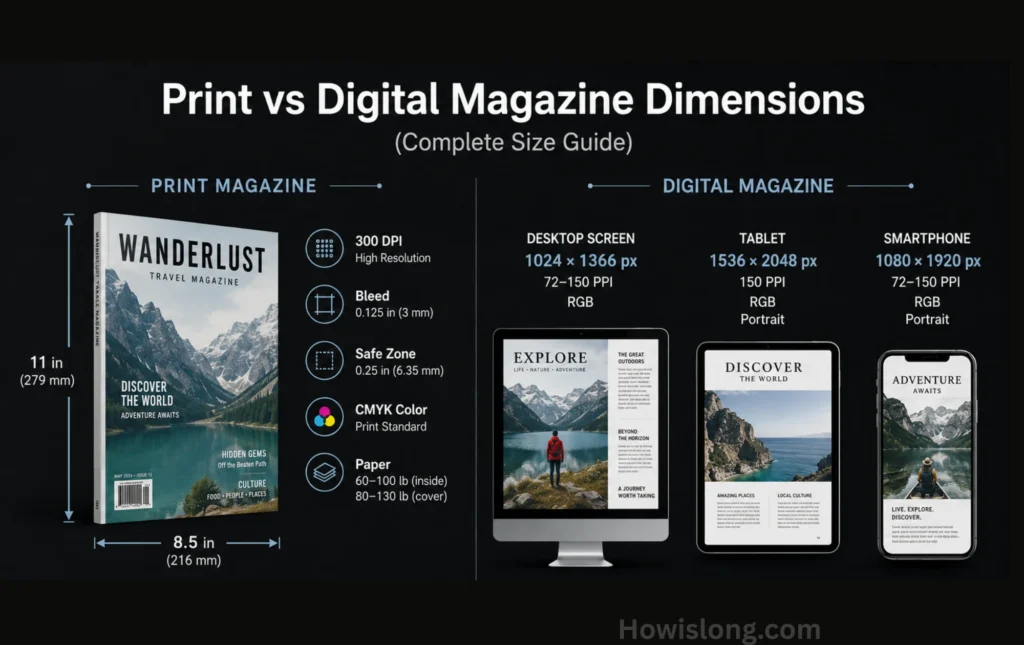
Magazine page size requirements differ completely between print and digital. Each medium has its own technical rules.
Print Magazine Technical Specifications
Print magazines require 300 DPI resolution. Anything lower produces blurry text and muddy images on paper.
Bleed areas extend 0.125 inches (3mm) beyond the trim line. This prevents white edges after the cutting stage. Safe zones sit 0.25 inches inside the trim — keep all critical text and logos inside this boundary.
CMYK color mode is mandatory for print. RGB colors shift unpredictably when converted to ink. Interior pages use 60–100 lb text weight paper. Covers use 80–130 lb cover stock for durability and feel.
Binding choice also affects final magazine dimensions. A 48-page saddle-stitched magazine adds roughly 0.125 inches of thickness. Perfect binding adds 0.25 to 0.75 inches depending on page count. That spine becomes printable real estate for the title and issue number.
Digital Magazine Dimensions by Device
Digital magazine dimensions are measured in pixels, not inches. Each screen size needs different specs.
Desktop viewers display best at 1024 × 1366 pixels. Tablets need 1536 × 2048 pixels for sharp rendering on high-resolution screens. Smartphones use 1080 × 1920 pixels in portrait orientation.
Screen resolution runs at 72–150 PPI — far lower than print’s 300 DPI requirement. RGB color mode applies to all digital formats. Interactive elements like video, hyperlinks, and animations work in digital editions but not in print.
Responsive design lets one layout adapt across all screen sizes automatically. Always optimize file size. A slow-loading digital magazine loses readers before the first page.
FAQs — Magazine Dimensions
What is the standard magazine size in the United States?
The standard magazine size in the USA is 8.5 × 11 inches (216 × 279 mm). About 60–70% of US consumer magazines use this format. It matches letter paper and keeps printing costs low.
What size is a Vogue magazine?
Vogue magazine size measures 8 × 10.875 inches. This custom dimension is slightly narrower and shorter than standard US letter. It creates the tall, elegant proportions that define Vogue’s signature look.
What is digest size magazine?
Digest size measures 5.5 × 8.5 inches (140 × 216 mm). It costs 30–40% less to produce than letter size. Reader’s Digest popularized this compact, portable magazine format.
Are magazines A4 or A5 size?
US magazines are neither. They use letter size (8.5 × 11 inches), which is close to but not identical to A4 (8.27 × 11.69 inches). Digest size resembles A5 (5.83 × 8.27 inches) but follows different proportions.
How does magazine size affect production costs?
Standard 8.5 × 11 inch formats cost 20–30% less than custom sizes. Larger formats like tabloid or oversized increase paper, handling, and distribution costs by 40–70%. Digest size cuts costs by roughly 30–40% compared to letter.
What size frame fits a standard magazine?
For a standard 8.5 × 11 inch magazine, use a 10 × 13 inch or 11 × 14 inch frame with matting. Always measure your specific issue first — trim sizes vary slightly between publications.
How do I design a magazine in InDesign with correct dimensions?
Open InDesign and go to File > New Document. Set width to 8.5 inches and height to 11 inches. Add 0.125-inch bleeds on all sides and 0.25-inch margins. Enable Facing Pages for spread view. Set resolution to 300 DPI for print-ready output.
What is the best magazine size for photography?
Tabloid (11 × 17 inches) and oversized (9 × 12 inches+) formats showcase photography with maximum detail and impact. Square format (8.5 × 8.5 inches) also works well for art and portrait-focused publications.
Conclusion
Magazine dimensions shape everything — print costs, reader experience, newsstand presence, and brand identity. The standard 8.5 × 11 inch format dominates US publishing for good reason. It balances cost, comfort, and design flexibility better than any other size.
But the right magazine size depends on your content and audience. Fashion needs height. Photography needs space. Portability needs compact. Match your format to your purpose and your publication will perform better from the first issue.

Hi, I’m Ava Addams, the author at HowIsLong.com. I help simplify measurements with easy-to-use tools and clear explanations—so you can convert units quickly and accurately.Explore our guides to understand lengths, distances, and everyday measurements with confidence.
Related Posts